
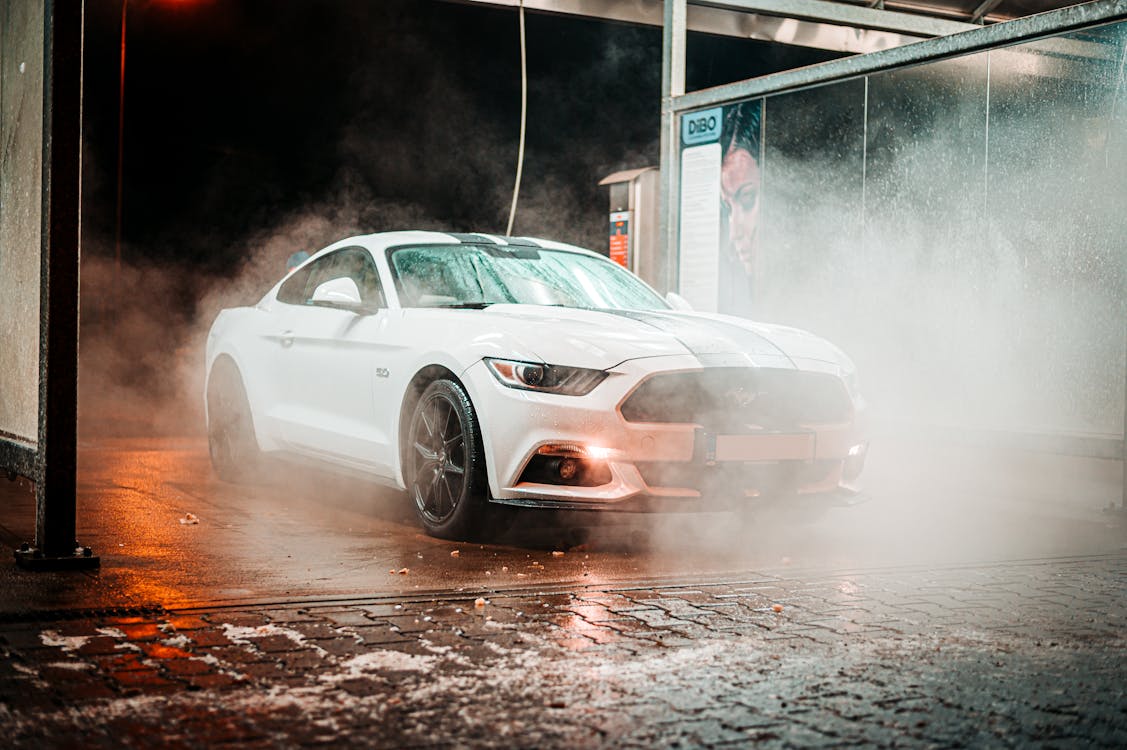
If you’re trying to decide between traditional car wax and a professional ceramic coating, you’re asking the right question. Both protect paint. Both add gloss. But they do very different things, last very different amounts of time, and cost very different amounts of money. This guide gives you an honest side-by-side so you can make the right call for your vehicle and budget.
Quick Comparison Chart
| Feature | Traditional Wax | Ceramic Coating |
|---|---|---|
| Durability | 4–8 weeks | 2 to 7 years |
| Chemical resistance | Low | High |
| UV protection | Minimal | Strong |
| Hydrophobic effect | Moderate | Extreme |
| Scratch resistance | None | Light (micro-marring resist) |
| Average cost | $50–$200 DIY / pro wax | $599–$1,499 pro install |
| Prep required | Wash + clay optional | Full decon; correction on the $1,099 and $1,499 packages |
What Is Car Wax?
Wax is a soft, organic protective layer — usually carnauba (natural) or a synthetic polymer — that sits on top of your clearcoat. It fills in micro-imperfections and creates a light hydrophobic barrier. Wax gives a warm, deep gloss that many enthusiasts love, but it’s fragile. Heat, sun, soaps, and rain gradually wash it away within weeks.
What Is a Ceramic Coating?
A ceramic coating is a liquid polymer — typically based on silicon dioxide (SiO2) — that chemically bonds to the clearcoat on a molecular level. Once cured, it becomes a semi-permanent part of the paint surface. Top-tier ceramic coatings last 2 to 7 years, resist chemicals, shed water aggressively, and dramatically reduce wash time. It’s a one-time investment, not a monthly routine.
Durability: The Biggest Difference
A quality carnauba wax lasts 4–8 weeks before you need to reapply. A ceramic coating lasts 2 to 7 years depending on the product and maintenance. Over 5 years, you’d apply wax ~40 times. A single ceramic install covers the same period with maybe 1–2 maintenance washes per year.
Gloss + Hydrophobics
Wax produces a softer, “warm” gloss that some purists prefer for show cars. Ceramic produces a sharper, “wet look” gloss with extremely tight water beading — water actually sheets off at highway speeds. For daily drivers, ceramic’s hydrophobic behavior is functionally superior: less dirt sticks, washes take 30–50% less time.
Cost Per Year
At $100 per wax application every 6 weeks, you’re spending roughly $800/year on wax. Our $599 Ceramic Coating Package lasts 2 to 3 years, which works out at roughly $200 to $300 a year, and it outperforms wax on every protective metric. The $1,499 Double Ceramic Coating with Paint Correction lasts 5 to 7 years, or roughly $215 to $300 a year. Ceramic wins the long-game cost analysis.
When Does Wax Still Make Sense?
- Show car that gets detailed for specific events and rarely driven
- Very short-term ownership (selling the car within 3–6 months)
- You enjoy DIY detailing as a hobby and like the hands-on ritual
- Budget is under $200 and you can’t stretch to a ceramic install
When Is Ceramic the Better Choice?
- Daily driver you plan to keep 2+ years
- Lease vehicle — ceramic protects the lease-end paint condition, saving wear-and-tear charges
- Coastal Lowcountry owner dealing with salt air paint damage
- Expensive vehicle where paint replacement is costly
- You value time — ceramic-coated cars wash 30–50% faster
What About “DIY Ceramic Sprays”?
Retail ceramic sprays ($30–$80) are real products but they are NOT the same as a professional ceramic coating install. They last 3–12 months, offer lower chemical/UV resistance, and can never be applied over flaws without first paint-correcting. Treat them like a premium wax, not a coating.
Recommendation for Most Lowcountry Drivers
If you plan to keep your vehicle 2+ years and drive it daily, ceramic is the clear winner — especially within 10 miles of the coast where salt air attacks paint year-round. Lux Detailer installs professional-grade 9H ceramic coatings right at your driveway, fully mobile, and backed by our satisfaction guarantee. See every option side by side on our paint protection page. Get a free ceramic coating quote or call (843) 683-2819.
Mobile detailing across the Lowcountry. We come to your driveway in Bluffton, Hilton Head, Beaufort, Savannah, Pooler and Richmond Hill.